Tengo hambre. A Spanish speaker says it three times a day and it means "I'm hungry," but the words say "I have hunger." Not I am hungry. I have it, the way you'd have a coin in your pocket. That tiny swap is the thing nobody flags in week one, and it's why English speakers spend months saying estoy hambriento and soy treinta años and wondering why the room goes quiet.
Here's the part the textbook splits into three separate chapters and never connects: English uses "to be" for almost every state. I am hungry, it is cold, that movie is scary. Spanish refuses to do that. It hands the job to three different verbs depending on what kind of state you're describing. Your body runs on tener. The weather runs on hacer. Your reactions run on dar. Learn which category you're in and the right verb is already chosen for you.
The one switch: stop translating "to be"
Say these out loud: tengo hambre, hace frío, me da miedo. "I'm hungry, it's cold, it scares me." Three states, three verbs, and not a single ser or estar in sight.
That's the whole move. When you want to describe a state in Spanish, don't translate the English "am" or "is." Ask what kind of state it is. Is it something your body feels? Is it the weather outside? Is it a thing reacting on you? Each category has already picked its verb, and once you stop reaching for estoy by reflex, three different walls of mistakes come down at once.
Your body runs on tener, not ser or estar
When you're hungry, cold, scared, or sleepy, Spanish says you have that thing. The verb is tener, and the state is a noun:
- tengo hambre = I have hunger (I'm hungry)
- tengo sed = I have thirst (I'm thirsty)
- tengo frío / tengo calor = I have cold / heat (I'm cold / hot)
- tengo sueño = I have sleep (I'm sleepy)
- tengo miedo = I have fear (I'm scared)
- tengo prisa = I have haste (I'm in a hurry)
- tengo razón = I have reason (I'm right)
- tengo treinta años = I have thirty years (I'm thirty)
This is where the English-to-Spanish autopilot crashes. Estoy hambriento isn't impossible, but hambriento is an adjective closer to "starving," and using it for ordinary "I'm hungry" sounds dramatic, like announcing you haven't eaten in days. The genuinely broken one is estoy hambre: you can't pair estar with the bare noun "hunger." And soy treinta años tells a Spanish speaker, literally, that you are thirty years rather than that you have them, which is exactly why age takes tener. The fix in every case is the same verb: tener.
The mucho-not-muy trap
You're very hungry. So you say tengo muy hambre, and a native speaker winces. The correct phrase is tengo mucha hambre, and the reason is the most useful grammar fact in this whole post: hambre is a noun, not an adjective.
Muy only stretches adjectives and adverbs (muy alto, muy rápido). To pile more onto a noun you need mucho, and mucho has to agree with the noun's gender. That means the gender of each state-word actually matters here:
- feminine: mucha hambre, mucha sed, mucha prisa, mucha razón
- masculine: mucho frío, mucho calor, mucho sueño, mucho miedo
So tengo mucha hambre but tengo mucho frío. Get the noun-not-adjective idea once and the whole muy/mucho question stops being a coin flip.
One small curveball worth knowing: you'll see el hambre, with the masculine-looking article el, because a feminine noun starting with a stressed "a" borrows el to avoid two a-sounds colliding. The word is still feminine, so the Real Academia confirms it's mucha hambre, not mucho hambre, every time.
The weather makes cold: hacer and hay, not ser
It's cold out, so you reach for es frío. Wrong verb. Spanish weather mostly runs on hacer, the verb that elsewhere means "to do" or "to make":
- hace frío = it's cold (literally "it makes cold")
- hace calor = it's hot
- hace sol = it's sunny
- hace viento = it's windy
- hace buen / mal tiempo = the weather's nice / bad
Why not ser? Because ser is for things that are cold by their nature. El hielo es frío, ice is cold, that's what ice is. But today's weather is a passing condition, not an identity, so it gets hacer.
Two exceptions you'll use constantly. Cloudiness is an adjective, so it takes estar: está nublado, it's cloudy. And fog, storms, and other "there is" weather take hay: hay niebla (there's fog), hay tormenta (there's a storm), as the weather lesson lays out. So a full forecast might be hace frío, está nublado, y hay niebla, three different verbs in one breath, none of them ser.
Try it in Conversa
Practice with AI characters who adapt to your level and give real-time feedback.
Try Conversa FreeReactions are given: dar, the cousin of gustar
That horror movie scares you. In Spanish it gives you fear: me da miedo. The verb is dar, "to give," and it powers a whole family of reaction idioms that all work like gustar. The thing causing the feeling is the subject, you're the indirect object catching it:
- me da miedo = it scares me
- me da igual = I don't care (it's all the same to me)
- me da vergüenza = it embarrasses me
- me da asco = it disgusts me
If you've already untangled why me gusta el café means "coffee is pleasing to me," this is the same machine with a different verb. The fear, the disgust, the embarrassment is the thing acting; you're on the receiving end. If that structure still feels backwards, the gustar post walks through the whole pattern.
Dar throws in two reflexive freebies you'll want anyway: darse cuenta de (to realize) and darse prisa (to hurry up). Me di cuenta de que tenía prisa, I realized I was in a hurry, and notice the de before que. Dropping it is a very common mistake.
Drill it in one sentence
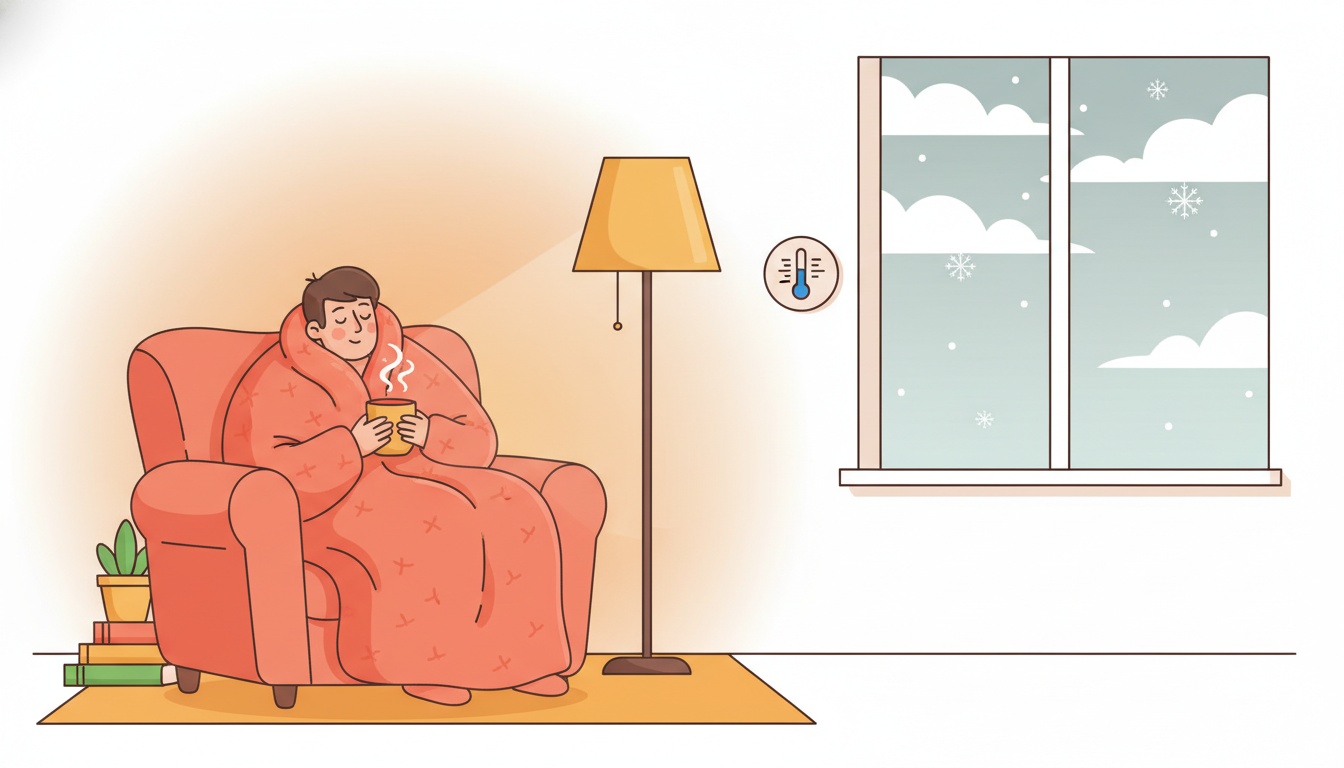
Describe a single cold morning and you can fire all three patterns without pausing: Tengo sueño, hace frío, y me da pereza levantarme. "I'm sleepy, it's cold, and I can't be bothered to get up." Body state on tener, weather on hacer, reaction on dar. That one sentence is the whole post.
If you want one practice that locks this in, narrate your own state out loud every morning for a week before you touch English. An AI conversation partner like Conversa is useful here precisely because it'll answer back in the moment, so a slipped estoy hambre gets corrected while you're still in the sentence rather than three lessons later.
The next time you catch yourself about to say estoy or soy to describe how you feel, stop on the verb. Ask which of the three you're in: a body that has, a sky that makes, or a thing that gives. The verb is already waiting for you.