食べて、寝た. Three words, and most beginners read them wrong. They see 食べて (tabete), reach for "eating," and translate it as something present or ongoing. But the sentence means "I ate and slept." The past tense is sitting in 寝た (neta) at the very end, and 食べて borrowed it.
That is the whole secret of the te-form, and it's the thing the textbooks bury. The te-form is not a tense. It's a connector. It hooks onto the front of another verb, a request, a permission, a "try it and see," and then it quietly takes whatever time that final word is pointing at. Learn to build it and you've unlocked maybe a dozen of the most common patterns in spoken Japanese at once.
The bad news first: Japanese te-form conjugation is irregular, and the chapter that introduces it usually looks like a 9-row table you're supposed to memorize cold. The good news: it's really a five-line song plus two exceptions, and once it's in your mouth you stop thinking about it.
It's a connector, not a tense
Watch what happens when you change only the last verb. 食べて、寝る (tabete, neru) means "I eat and sleep," present or future. 食べて、寝た (tabete, neta) means "I ate and slept," past. The 食べて never changed. The te-form carries no tense of its own and inherits it from the clause-final verb (see Tae Kim's grammar guide for the conjugation basics it powers).
食べて never changes; the final verb sets the tense for the whole chain.
This is why beginners stall on real sentences. You hit a long line with three te-forms in a row and panic about when everything is happening. Don't. Read to the end, find the final verb, and that one word sets the tense for the whole chain.
The Japanese te-form conjugation song (the う-verbs)
The verbs that change their sound are the godan verbs, also called う-verbs, and they split into five neat groups by their final kana. This is the song:
- う・つ・る → って: 買う becomes 買って (katte, "buy"), 待つ becomes 待って (matte, "wait"), 降る becomes 降って (futte, "fall").
- む・ぶ・ぬ → んで: 飲む becomes 飲んで (nonde, "drink"), 遊ぶ becomes 遊んで (asonde, "play"), 死ぬ becomes 死んで (shinde, "die").
- く → いて: 書く becomes 書いて (kaite, "write").
- ぐ → いで: 泳ぐ becomes 泳いで (oyoide, "swim").
- す → して: 話す becomes 話して (hanashite, "speak").
Five lines. Say them out loud a few dozen times in that order and the rhythm does the memorizing for you. People genuinely chant this; Benkyou Mashou and most classroom teachers treat it as a song for exactly that reason. The sound shifts have a name, 音便 (onbin), but you don't need the linguistics to use them. You need the five lines automatic.
The easy half, and the only two irregulars
The other big group, the ichidan verbs (る-verbs), is almost insultingly simple: drop る, add て. 食べる becomes 食べて (tabete), 見る becomes 見て (mite). That's the entire rule. No sound changes, no groups.
And the irregulars? There are only two. する (to do) becomes して (shite). 来る (kuru, "to come") becomes 来て (kite). Two verbs, memorized once, done forever.
The one trap: 行く becomes 行って
行く (iku, "to go") ends in く. By the song, it should become 行いて. It doesn't. It becomes 行って (itte), as if it were a う・つ・る verb. This is the single exception that ambushes every learner, and Tofugu calls it the one verb that breaks the く pattern. Memorize 行って as its own little fact. It's the only く-verb that lies to you.
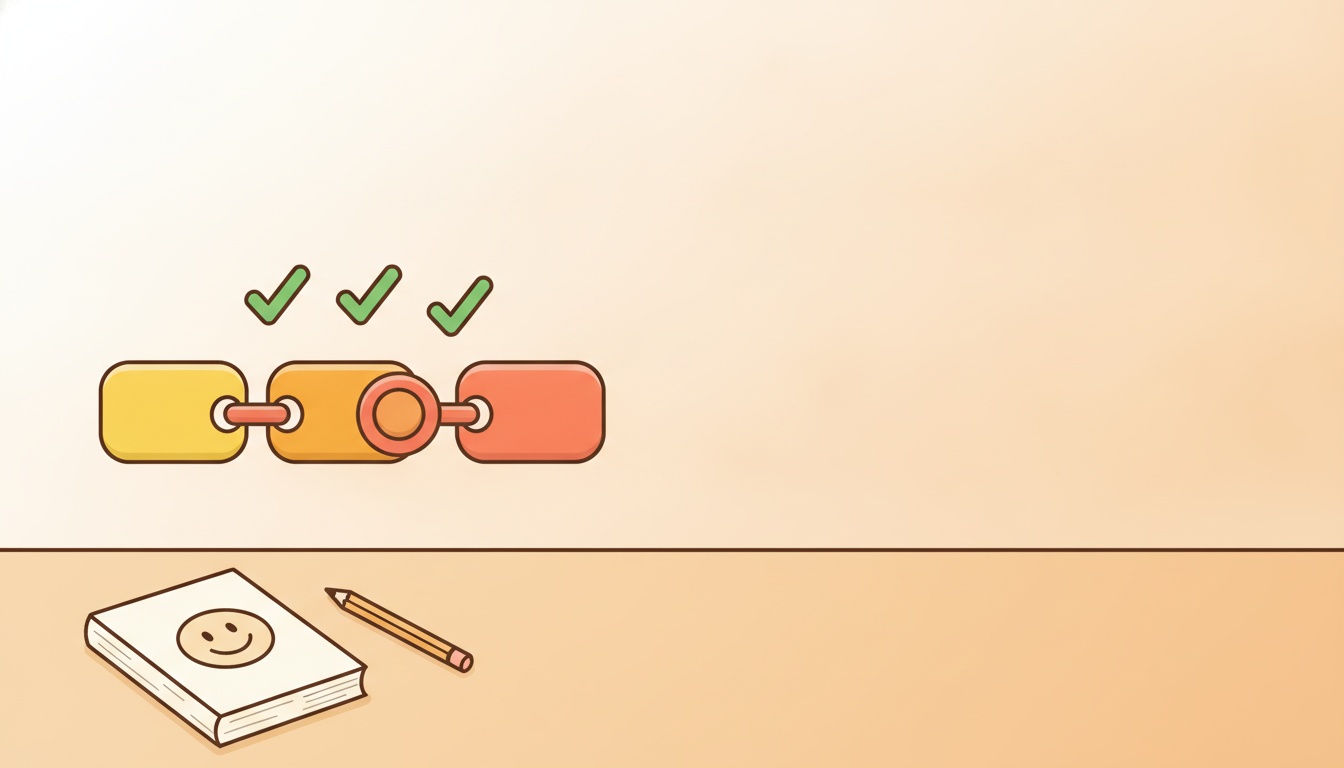
The one く-verb that breaks the song: it conjugates like a う・つ・る verb.
A dozen doors the te-form opens
ちょっと待ってください: "please wait a moment." That's just the te-form of 待つ with a request bolted onto the back, and it's the first of about a dozen patterns that attach to the form the same way. This is the reason teachers drill the te-form so early. Build it once, and all of this comes online.
The five you'll use on day one:
- 〜てください asks politely. ちょっと待ってください (chotto matte kudasai) is "please wait a moment." This is the single most useful phrase a tourist owns.
- 〜ている marks an action in progress or a continuing state. 何を読んでいる?(nani wo yonde iru?) is "what are you reading?" Note that 知っている (shitte iru) means "I know," a continuing state, not "I am knowing."
- 〜てもいい asks or grants permission. 食べてもいいですか (tabete mo ii desu ka) is "may I eat this?"
- 〜てはいけない forbids. 図書館で大きな声で話してはいけません (toshokan de ōkina koe de hanashite wa ikemasen) is "you must not talk loudly in the library." You'll read this exact shape on signs.
- 〜てから means "after doing." 宿題をしてからゲームをします (shukudai wo shite kara geemu wo shimasu) is "I'll play games after I do my homework." The order is strict: homework finishes, then games start, never the other way around.
The next rung up, worth knowing once the first five are solid:
- 〜てしまう signals completion, or regret that something happened. お酒を飲んでしまった (osake wo nonde shimatta) can mean "I finished the drink" or, with a wince, "I ended up drinking." Tone and context decide. (Nihongo Nana lays out both readings.)
- 〜てみる means "try it and see." 食べてみる (tabete miru) is "I'll give it a taste." Literally it borrows 見る, "to see."
- 〜ておく means "do it in advance." 買っておく (katte oku) is "buy it ahead of time," like stocking the fridge before guests arrive.
And underneath all of those, the plainest use of all: the te-form is the Japanese "and." 朝ご飯を食べて、学校に行った (asa gohan wo tabete, gakkō ni itta) is "I ate breakfast and went to school." It can even imply "and so": 寝坊して、遅れた (nebō shite, okureta) is "I overslept, and so I was late." Sequence and cause, in one little form.
Try it in Conversa
Practice with AI characters who adapt to your level and give real-time feedback.
Try Conversa FreeHow to actually drill it
飲んで, 書いて: say those two until they fall out of your mouth without a pause, then add the rest of the song. Chant the five う-verb lines, fold in する→して and 来る→来て, and tack on the 行って trap at the end. Forty verbs out loud beats forty minutes staring at a table.
Then go hunting for it. The te-form is everywhere in natural speech. That makes it ideal for practice with Conversa, an AI conversation partner you can talk to without the fear of getting it wrong in front of a real person. Ask it something with 〜てもいいですか, listen for the te-forms in its reply, and watch for that final verb that sets the tense. One honest caveat: this works best once you already know maybe a hundred verbs. Before that, you don't have enough raw material to conjugate, and drilling the form in a vacuum is dispiriting.
It is genuinely hard at first. The 音便 sound shifts feel arbitrary for a week or two, and the 行って exception will catch you more than once. That's normal. But the te-form pays back the effort faster than almost anything else in Japanese grammar. The day the song goes automatic, every て you hear in a drama, on a sign, or in a request becomes a pattern you already own. It also feeds straight into the 〜ている resulting-state distinction that trips people up next, so the work you do here keeps paying off.