山 is yama when it sits alone and zan in 登山 (tozan, mountain climbing). You learned both readings months ago. Then you help a friend move, read 台所 off the side of a cardboard box, and say daisho. The word is daidokoro. Kitchen.
You already know the definitions. Onyomi (音読み) is the reading borrowed from Chinese, and kunyomi (訓読み) is the native Japanese word that got attached to the same character. Knowing that doesn't help in the half-second before you guess. What helps is four checks run in order, a short list of the words that break them, and a reason to stop memorising reading lists.
Step 1: is there hiragana stuck to the kanji? Then it's kunyomi
生きる, 生まれる, 生える. Three verbs, one kanji, and the hiragana trailing each one (the okurigana) settles the question before you think about it. English Wikipedia's kanji article puts it flatly: a kanji followed by okurigana indicates kunyomi.
The okurigana does a second job that most guides skip. It tells you which kunyomi.
The kana after the kanji picks one native reading out of several.
Two cracks. 開く can be aku or hiraku, and the same Wikipedia article admits okurigana isn't always enough to choose. And one family of verbs slips through entirely: 感じる is kan-jiru, 信じる is shin-jiru, 愛する is ai-suru. That's an onyomi with する or じる bolted on. If the trailing kana is する or じる, try the onyomi first, and keep 閉じる (tojiru, to close) in mind as the everyday native exception.
Dictionaries print this step for you. Look up 生 on Jisho and the onyomi セイ and ショウ come in katakana, while the kunyomi come in hiragana with a dot where the okurigana starts: い.きる, う.まれる. That katakana-for-on, hiragana-for-kun split is the convention of the official jōyō kanji table itself.
Step 2: is the kanji standing alone? Kunyomi, unless it has none
山 alone is yama. 川 alone is kawa. 肉 alone is niku, and that's onyomi.
One question sorts the lone kanji: does it have a native reading at all? 肉, 駅 (eki, station), 茶 (cha, tea), 絵 (e, picture) and 気 (ki, mood) have no kunyomi in the jōyō table, so the onyomi is the only thing left to say. Wikipedia's kanji article notes that most lone-kanji onyomi cases are exactly these.
本 is the awkward one. It has a kun reading, もと (origin), but the word for "book" is hon, onyomi, every time. The meaning picks the reading. Treat Step 2 as a default; 本 will catch you once, and then it won't.
Step 3: two kanji with no kana between them? Default to onyomi
行く is iku. Put 行 inside 銀行 and it becomes kō: ginkō, bank. Inside 旅行 it's ryokō, travel. 東京 is tōkyō, onyomi on both halves.
A kanji that reads as a native word alone usually switches to its Chinese-derived sound inside a compound.
Most two-kanji words are kango: words that came from Chinese with their sound, or were built later in Japan out of those Chinese-derived sounds. Either way, the compound arrives with its onyomi already attached. Wikipedia's phrasing is careful: compounds "usually, but not always" take onyomi. 牛肉 (gyūniku, beef) follows the rule. 豚肉 (butaniku, pork) doesn't.
Step 4: check the word against the known exceptions
台所 is where Steps 1 to 3 sent you wrong at the top of this post. ダイ is onyomi, but dokoro is the native word ところ. You can't catch that cold. This step is a short list of suspects you learn once, and Japanese has names for most of them.
Jūbako-yomi and yutō-yomi (重箱読み, 湯桶読み): half one, half the other
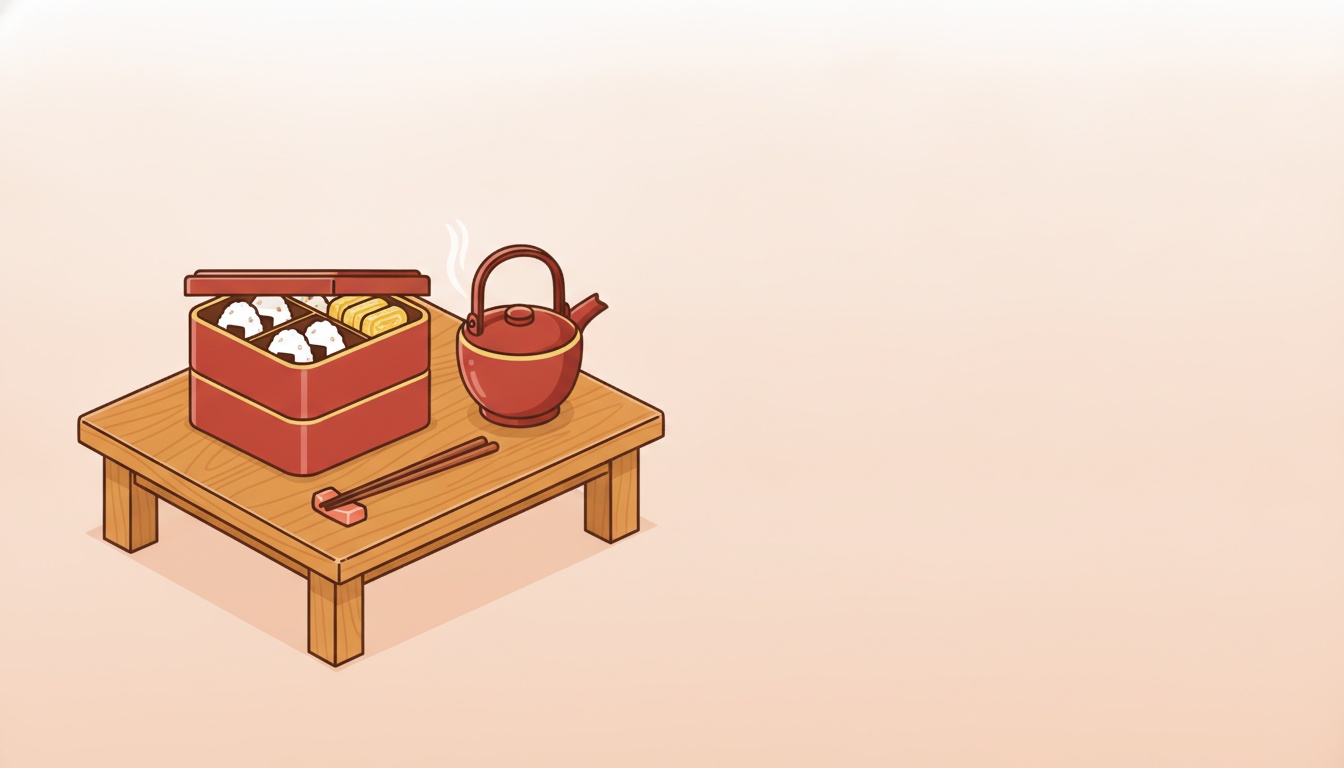
重箱読み (jūbako-yomi) is onyomi first, kunyomi second. The name is its own example: 重箱 is jū (on) plus bako (kun), a tiered lunch box. 湯桶読み (yutō-yomi) runs the other way, kun then on: 湯桶 is yu plus tō, a lacquered hot-water pail. Japanese Wikipedia's entry lists many more of each.
The ones you'll meet weekly (the hyphen marks the seam):
- 重箱読み: 本屋 (hon-ya, bookstore), 台所 (dai-dokoro, kitchen), 番組 (ban-gumi, TV show), 毎朝 (mai-asa, every morning)
- 湯桶読み: 場所 (ba-sho, place), 手帳 (te-chō, planner), 夕刊 (yū-kan, evening paper), 豚肉 (buta-niku, pork)
台所 is 重箱読み: on ダイ, then the native word ところ, voiced to どころ.
Look at which halves stay native: 場 as ba, 手 as te, 屋 as ya, 組 as gumi, 色 as iro in 金色 (kin-iro, gold). When one of those kanji turns up in a word you don't know, slow down before saying the onyomi. They're suspects, not rules: the same 場 is jō in 会場 (kaijō, venue).
Kun all the way through: 朝日, 場合, 手紙
朝日 (asahi, morning sun) is asa plus hi. 場合 (baai, case) is ba plus ai. Neither half is onyomi, and there's no special name for it.
手紙 is tegami, from 手 te and 紙 kami. That voicing shift at the seam is rendaku, and the rendaku post covers how to undo it by ear. It works as a tell only when you already know the base word: if you know 紙 alone is kami and you hear gami, that half is native. Onyomi voice too (登山 is tozan), so a voiced seam on its own proves nothing.
熟字訓: words you can't split at all
今日 is kyō, today. Try to divide it: is kyo the 今 and u the 日? Neither. The reading belongs to the whole word, and Japanese calls this 熟字訓 (jukujikun). 大人 (otona, adult), 昨日 (kinō, yesterday), 二十歳 (hatachi, age twenty) and 梅雨 (tsuyu, rainy season) work the same way.
The jōyō table's appendix lists 116 special readings, most of them this kind, and some come with an onyomi twin that means something slightly different. 今日 read konnichi means "these days", as in こんにちは. 明日 is ashita or asu in conversation and myōnichi in a formal email. You won't decode these. You learn them as words, the way you learned "colonel" in English.
How often does the onyomi vs kunyomi test work?
You'll see "about 80%" quoted for the compound rule. I couldn't find where that number comes from, so here are figures with a source behind them.
A count of the 新選国語辞典 dictionary (73,181 entries, cited on Japanese Wikipedia's 語種 page alongside surveys by NINJAL, Japan's national language institute) found 49.1% of headwords were kango. Words that mix on and kun, along with hybrids like 生ビール, ran from 2% to 8% across the surveys. Kun+kun compounds like 手紙 are counted with native words, so no survey gives a clean failure rate for Step 3. Mixed readings, at least, are a small slice.
Where each type lives is the more useful number. The same page reports that kango make up over 70% of the words in newspaper text, and native words over 70% of speech. That's why conversation can sound like a different language from your textbook's reading passages. Your ear mostly meets native words, the ones kunyomi come from. Your eye mostly meets onyomi compounds.
Try it in Conversa
Practice with AI characters who adapt to your level and give real-time feedback.
Try Conversa FreeKnowing it's onyomi still doesn't tell you which one
先生 is sensei. 一生 (lifetime) is isshō. Same kanji, both onyomi, two different sounds, and Steps 1 to 4 can't choose between them.
生 has 12 readings in the jōyō table, two onyomi and ten kunyomi, tied with 下 for the most of any character on it. Add the appendix readings like 芝生 (shibafu, lawn) and 弥生 (yayoi, the third month of the old lunar calendar), and a flashcard with every reading of 生 on the back is a list you'll never use in the order it was written.
The forum question "should I learn onyomi or kunyomi first?" has the same answer: neither. Learn the word 先生, the word 一生, the word 生きる. The reading is a property of the word, and every word you know becomes evidence for the next guess. If you've met 学生, 先生 and 留学生, an unfamiliar compound ending in 生 is a decent bet for sei.
Meaning can pick between the two systems, too. Wiktionary gives 市場 as ichiba, kun, for a physical marketplace and shijō, on, for the market in economics.
When 市場 is the place you buy fish, it's いちば. しじょう is the market in economics.
Names and places: stop applying the test
東京 is onyomi. 大阪 (Ōsaka, "big hill") is kunyomi. 神戸 is Kōbe, from an old native word, and the surname 東海林 can be read Shōji (or Tōkairin), and nothing in its three kanji predicts the first.
Even the country's name has two readings. Asked in 2009 whether 日本 is Nippon or Nihon, the Japanese Cabinet answered in writing that both are widely used and there's no need to pick one. When you meet a new name, ask the person or check. Native speakers do the same.
Run it out loud
Next time a word like 番組 stops you mid-sentence, run the checks under your breath: kana attached, standing alone, compound, suspect kanji. Guess, then look it up. Keep a short list of the words where you guessed wrong. After a few weeks it will probably be mostly mixed readings and 熟字訓, which are the exceptions worth learning by name.