頭が痛いです。 Atama ga itai desu. "I have a headache." It's correct. Your textbook gave it to you, the grammar is clean, and a Japanese person will understand every syllable. It also sounds like a robot reporting a malfunction.
Now add two sounds: 頭が痛いんです。 Atama ga itai n desu. Same headache, same politeness level, but now it means something closer to "the thing is, I've got a headache." It's the difference between reading a line off a screen and actually telling someone what's going on with you. Most textbooks introduce that little ん/の as "emphasis" or "the explanatory form" and move on. That label is doing real damage, because んです is not louder です, and treating it that way is why so many learners either sprinkle it everywhere or avoid it completely.
Why "emphasis" is the wrong label
When you attach んです, you're framing the sentence as the explanation behind a situation instead of dropping a bare fact into the void. Tae Kim's classic guide translates the nuance as "[the thing is]…," which is exactly the right English instinct: there's an implied because or here's what's going on riding underneath. (Tae Kim's Guide)
んです frames the sentence as the reason behind a situation, not as a louder fact.
Picture a convenience store clerk reaching for your card and you stopping them: 父の車なんです。 Chichi no kuruma na n desu. "It's my dad's car, actually." You're not stressing whose car it is. You're explaining why you're hesitating. Or your friend asks why you're late and you say バスが遅れたんです。 Basu ga okureta n desu. "The bus was late." The んです signals "this is my reason," which is exactly what they were asking for. Tofugu describes the form as filling "the gap of understanding" between you and the listener, and that's the whole job. (Tofugu)
Strip the んです off those and they turn into bald facts with no social glue. Coto Academy puts it bluntly: without this form your Japanese stays "bland" and "robotic," because you're never connecting one statement to the situation around it. (Coto Academy)
The な that trips everyone up
That mysterious "nan desu" sound you keep hearing in real conversation? Here's where it comes from. With verbs and い-adjectives, you just take the plain form and bolt んです onto the end. 行くんです (iku n desu, "I'm going"). 高いんです (takai n desu, "it's expensive"). Past and negative ride on the plain form too: 食べたんです (tabeta n desu, "I ate it"), 来なかったんです (konakatta n desu, "they didn't come").
But with nouns and な-adjectives, you can't just slam them against ん. You slip a な in between. A student explaining themselves says 学生なんです。 Gakusei na n desu. "I'm a student, you see." Not 学生んです. Same with な-adjectives: 暇なんです (hima na n desu, "I'm free / I've got nothing on"), 静かなんです (shizuka na n desu, "it's quiet"). That な is the little connector that links a noun to the explanatory ん, and it's the exact sound you've been hearing as "nan desu." The pattern is documented the same way across Bunpro and Tofugu, so you can trust it as a hard rule, not a stylistic option.
Nouns and な-adjectives take な before ん; verbs and い-adjectives attach directly.
Questions: 〜んですか asks for the story, not the facts
どうしたんですか。 Dō shita n desu ka. "What happened?" You say this when you walk in and your coworker is clearly upset. You're not requesting data, you're asking for the story behind what you're seeing. Compare it to a flat どうしましたか, which is closer to a clinic receptionist taking your details. The ん version reaches for the human context.
The same thing happens when you react to a discovery. Your new acquaintance answers your email in fluent Japanese and you say 日本語が話せるんですか。 Nihongo ga hanaseru n desu ka. "Oh, you can speak Japanese?" The んですか marks it as "I just noticed this and I want the backstory," not a yes/no quiz.
One honest warning: tone matters a lot here. Maggie Sensei's lesson shows んですか carrying more emotional weight and curiosity than a plain question, and the Go-Kigen guide flags that with the wrong delivery it can tip into sounding demanding, like an accusation of "well, why did you do that?" (Maggie Sensei, Go-Kigen) Keep it soft and curious, not sharp.
The Goldilocks problem: how often is too often
This is the part no grammar table tells you, and it's the real skill. んです is not a politeness upgrade you apply to every sentence. If you end every single statement with it, you start to sound like you're justifying your entire existence. The Go-Kigen guide names this directly: overusing んです makes you "seem like you're constantly explaining yourself or making excuses." (Go-Kigen) Imagine someone in English ending every sentence with "you see" or "the thing is." Exhausting.
But you already know the failure mode in the other direction. Drop んです entirely and you're back to the robot reading flashcards: clean, polite, lifeless.
So here's the working test. Before a sentence, ask yourself one thing: is there an unspoken because or that's why behind this? If yes, it's an んです. 遅れてすみません、電車が止まったんです (the train stopped, that's why I'm late) wants it. A neutral fact with no backstory, like answering "what's your name," does not. I won't give you a percentage. Nobody has reliable numbers on how often natives actually use it, and any figure you see online is somebody's guess. The feel for it comes from hearing it in context, not from a quota.
Try it in Conversa
Practice with AI characters who adapt to your level and give real-time feedback.
Try Conversa FreeThe one place you'll really need it: 〜んですが to launch a request
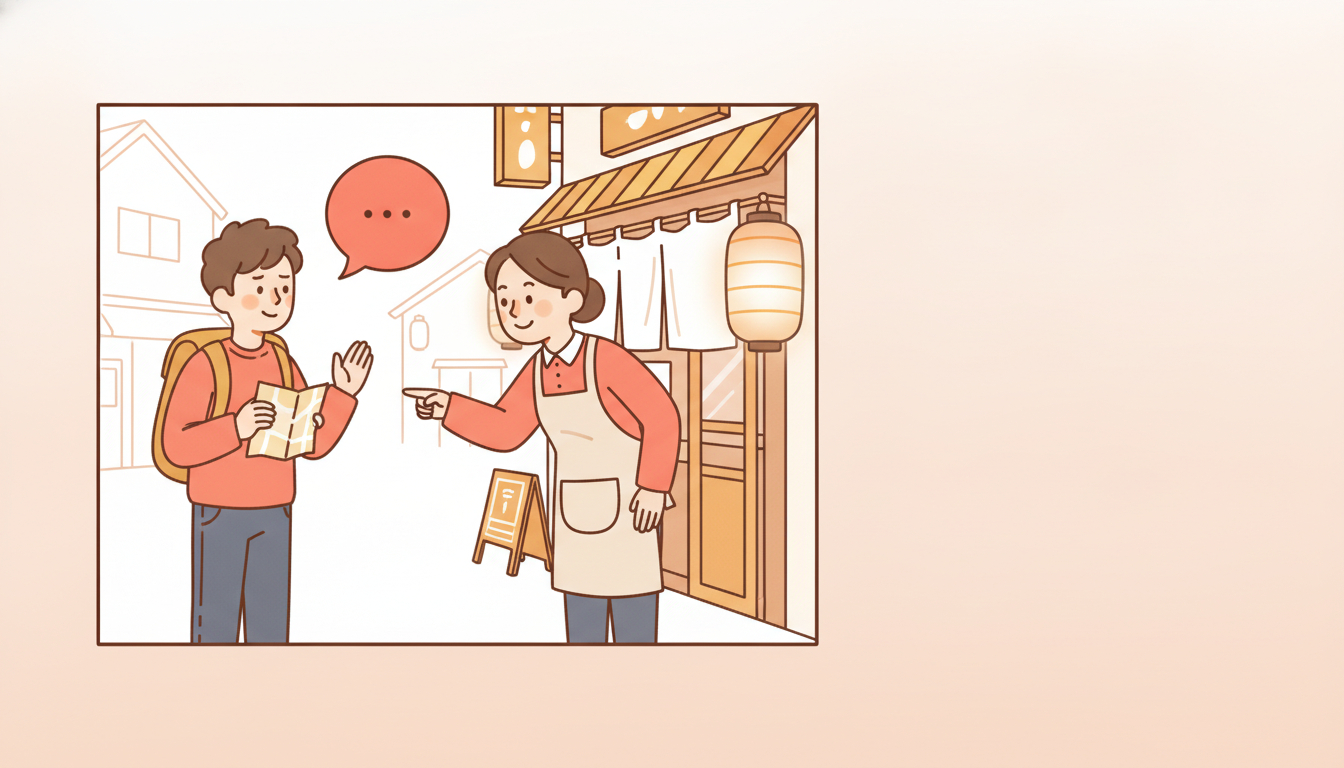
Lost in a Japanese city, you walk up to someone and say: すみません、富士病院に行きたいんですが…。 Sumimasen, Fuji byōin ni ikitai n desu ga… "Excuse me, I'm trying to get to Fuji Hospital…" And then you stop. You don't finish the sentence. That trailing が is doing something English doesn't really have a clean version of: it hangs the explanation in the air so the request ("could you point me there?") is understood without being stated.
State the situation, trail off on が, and the listener supplies the help.
This is the highest-value pattern in the whole topic, and most guides bury it. You give your situation with んです, tack on が (or the more casual けど), let it trail, and the other person fills in the help. 道に迷ったんですが…。 Michi ni mayotta n desu ga… "I've gotten lost…" 予約したいんですけど…。 Yoyaku shitai n desu kedo… "I'd like to make a reservation…" Even softening a favor before you ask: ちょっとお願いがあるんですが…。 Chotto onegai ga aru n desu ga… "I have a small favor…"
Bunpro ranks these trailing softeners by formality and notes that the construction works precisely by being incomplete, inviting the listener to respond. (Bunpro: んだけど・んですが) Once this clicks, asking for anything in Japanese gets dramatically less stressful, because you stop trying to build a full polite request and just state your situation and trail off. If you want to drill the trailing-off rhythm until it's automatic, this is the kind of thing that only sticks through live back-and-forth. Conversa is an AI conversation partner you can practice exactly these request openers with, out loud, without an audience.
Same ending, different rooms
The polite んです you've been learning has siblings that change the register. In writing, a formal report, or a textbook explanation, you'll see のです (no desu): 行くのです. Drop into casual speech with friends and it shrinks to んだ: 行くんだ. Narration, inner monologue, and dramatic declarations use のだ: 行くのだ, which reads as assertive rather than simply more formal, so don't think of it as a politeness ladder. And the soft, rising 行くの? (iku no?) shows up in casual and gentle speech. They're the same explanatory ん/の wearing different clothes for different rooms. Kansai keeps one more room in the house: 好きなんだ comes out as 好きやねん, and ねん is this same frame with a や in it.
If you've worked through the Japanese te-form, you already know how much rides on getting the plain form right before you attach anything. んです is one more thing that bolts onto that same plain base, which is why nailing your plain forms pays off twice.
What to do with this
Next time you're about to say a flat です sentence, pause for half a second and ask whether there's a "because" hiding behind it. "I have a headache," because that's why you're going home early. "I can't make Friday," because you've already got plans. When the answer is yes, that's an んです, and reaching for it is the move that turns correct-but-stiff Japanese into something that sounds like an actual person talking. You won't get the frequency perfect at first. Nobody does. But asking that one question, sentence by sentence, is how the feel for it grows.